

dobrodosli de.fw

Wegen seiner einheitlichen natürlichen Gegebenheiten, der außerordentlichen geomorphologischen Formen und der herrlichen Wälder wurde das Gebiet von Velika und Mala Paklenica schon im Jahr 1949 zum Nationalpark erklärt. Der Hauptgrund für die Erklärung dieses Gebiets zum Nationalpark war der Schutz des meist erhaltenen und größten Waldkomplexes auf dem Gebiet von Dalmatien, welcher vom Raubbau gedroht war.

Der Nationalpark erstreckt sich auf der Fläche von 95 km², wo sich die höchsten Gebirgsgipfeln Vaganski vrh (1757 m ü. M.) und Sveto brdo (1753 m ü. M.) befinden. Der Park umfasst das Gebiet der Sturzbäche Velika und Mala Paklenica bzw. deren bekannten Schluchten – senkrecht in den Südhang des Velebit-Gebirges eingeschnitten, sowie die weitere Umgebung. zen- und Tierwelt, attraktive Landschaften und unberührte Natur.

logo mali bijeli okvir.fw

Allgemeine Information

DATUM DER ERKLÄRUNG ZUM SCHUTZGEBIET:  19. Oktober 1949

HÖCHSTE GIPFEL:  Vaganski vrh 1 757 m ü. M., Sveto brdo 1 753 m ü. M.

INTERNATIONALER SCHUTZ:

MAB (Liste des UNESCO - Welterbes) – Biosphärenreservat, 10. Februar 1978.

Natura 2000, 1. December, 2014.

UNESCO Weltkulturerbe, 7. Juli, 2017.


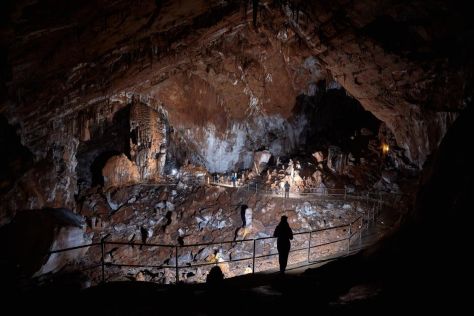
"Manita peć" Höhle

 MG 5015Manita pec
Manita peć ist die einzige Höhle auf dem Parkgebiet, welche für Besucher geöffnet und eingerichtet ist. Der großräumige Dom und die Schönheit der Bildungen begeistern die Besucher seit 1937, als der Pfad eingerichtet wurde und die Besuche anfingen. Der Eingang in die Höhle liegt bei 570 m über den Meeresspiegel, und das Heraufsteigen vom Parkplatz in Velika Paklenica dauert etwa eine und halb Stunde.

Mehr

Wanderwege

Planinarski dom Šime Sorić meni module

Der einzige Weg, auf welchen Sie Paklenica wirklich kennenlernen können, ist das Gehen. Auf dem Gebiet des Parks gibt es 150-200 km von Pfaden und Wegen – touristische Pfade und Wege, welche aus der Schlucht von Velika Paklenica bis zu der Höhle Manita peć, der Waldhütte „Lugarnica“ und der Berghütte führen, sowie Wanderwege, welche in die höchsten Gipfel von Velebit führen. Die Wege im Park sind durch Tafeln kennzeichnet und Wegzeichen markiert.

Mehr


 DSC 6311

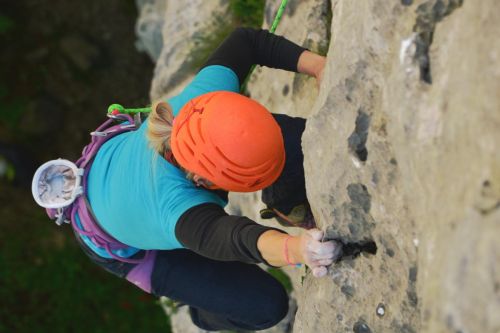
Kletteranlage

Der Nationalpark Paklenica ist das bedeutendste kroatische Kletterzentrum, das auch außerhalb Kroatiens bekannt ist. Der besondere Reiz dieser Kletteranlage ist die Nähe zur Meeresküste, sodass die Paklenica-Riviera der ideale Ort ist, um Kletter- und Wassersportarten zu kombinieren. Heute bestehen im Klettersteig von Paklenica, der von Kalksteinstrukturen gekennzeichnet ist, um die 600 gut markierte und ausgestattete Routen unterschiedlicher Schwierigkeitsstufen und Längen (Bewertungen von 3 bis 8b+), so dass jeder Kletterer etwas für seinen Geschmack finden kann.

Mehr

X
       Specific WH EN bossen Positief

Traditional architecture

The arrival of Croats in this area began in the early Middle Age. The earliest preserved traces of their presence are the chapels of St. George (Sv. Juraj) in Rovanjska and the chapel of St. Peter (Sv. Petar) in Starigrad, built in the 9th or 10th century A.D. 

Chapel of St. Peter (Sv. Petar) in Starigrad

Two forts - Večka kula (on the cape just east of Starigrad) and Paklarić (on top of a long-abandoned prehistoric hillfort, overlooking the entrance to Velika Paklenica gorge) – were probably erected in the late Middle Age (14th-16th century).

Vecka kulaThe depiction of the ruins of Večka Tower during the Turkish wars (by Martin Stier, mid-17th century)

This era was followed by two centuries of war with the Turks. The population fled and the area at the foot of Velebit was completely abandoned. As the Turkish power began to fade, in 1671 the Venetian authorities began to populate the area of Starigrad with Bunjevacs, a Croatian population from the neighboring areas that were still under Turkish occupation. In 1700, the Turks finally retreated, and the area at the foot of South Velebit was annexed to Venetian Dalmatia.

People
The pastures and treatable land of Velebit, contained in karstic sinkholes, provided for the local population. Having adapted to the geographic and climatic environment, the residents mostly engaged in nomad stock herding, which is confirmed by mountain shepherd residences. The fact that many people stayed in mountain residences in the summertime is reflected in the ruins of numerous sacral buildings: churches, chapels, altars, holy hills and measures (mirila). The features of the area are also reflected in the traditional architectural style – namely, the cube roofs, concrete barrel-shaped roofs that have remained preserved on houses, economic facilities and mills along the stream of Velika Paklenica.

Distinctive roof architecture

There are ten old settlements inside the National Park, which are now mostly abandoned:  Parići, Ramići, Kneževići, Katići, Škiljići, Jasenar, Rimenić, Jurline, Marasovići and Njive. Particularly interesting is the site Sklopina with the houses built into semi-faults.

Sklopina

Image

Javna ustanova Nacionalni park Paklenica
Dr. Franje Tuđmana 14a
HR - 23244 Starigrad-Paklenica

Tel.: +385 (0) 23 369 155, 369 202 (Verwaltung)

       +385 (0) 23 369 452 (Camp "Nacionalni park")
       +385 (0) 23 369 803 (Eingang 1 Velika Paklenica)


E-mail:
np-paklenica@paklenica.hr
prezentacija@paklenica.hr (info)

OIB: 24913665146
IBAN: HR0824070001100579272, OTP banka

Image

IZJAVA O ZAŠTITI PRIVATNOSTI I SIGURNOSTI OSOBNIH PODATAKA